Blog 2: Journey into Embodiment
Embodiment: Listening to the Body
6/17/20251 min read
Embodiment: Listening to the Body
What is embodiment?
Embodiment is the foundation of my research...
For me, embodiment is an invitation to slow down...
to listen...
to feel...
to hear...
to observe...
It is like a reminder that not all understanding comes from thinking and analysing... Sometimes it begins with the simple act of connecting to the body through touch and sensing what is speaking to me today... What do I actually need, instead of what I think I should do...?
Embodiment cannot be experienced in the same way by everyone because every body carries a different history. Through my own practice I have observed that each person responds differently to breath, movement and awareness, making every exploration unique.
Researchers such as Barbour (2004) and Feldenkrais (1972) describe the body as an active source of knowledge. Through movement, sensation and awareness, we begin to recognise patterns, habits and tensions that often go unnoticed. Rather than trying to change the body, embodiment invites us to first become aware of it.
This perspective shifts my attention away from asking...
"How does my movement look?"
towards another question...
"How does my movement feel?"
That simple shift has become an important part of my research.
As Feldenkrais (1972) suggests, awareness creates the possibility for learning. I am beginning to understand that before I can change the way I move, I first need to notice how I move.
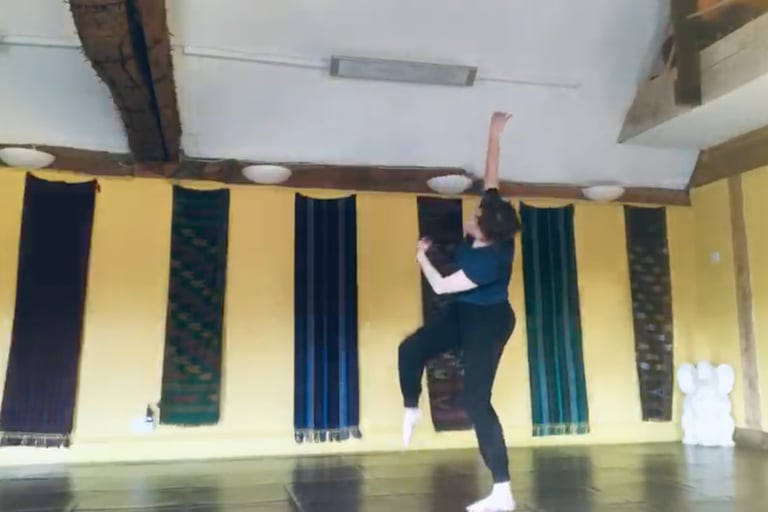
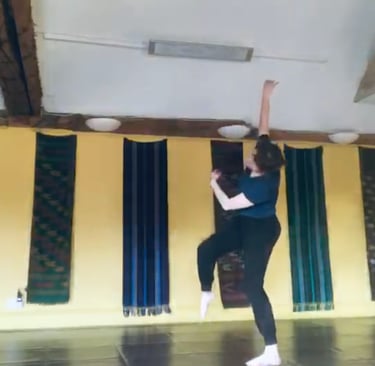
Studio Reflection
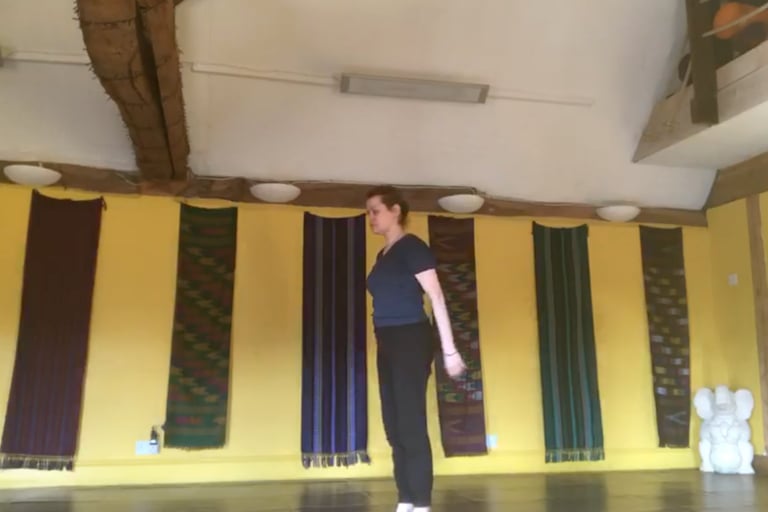
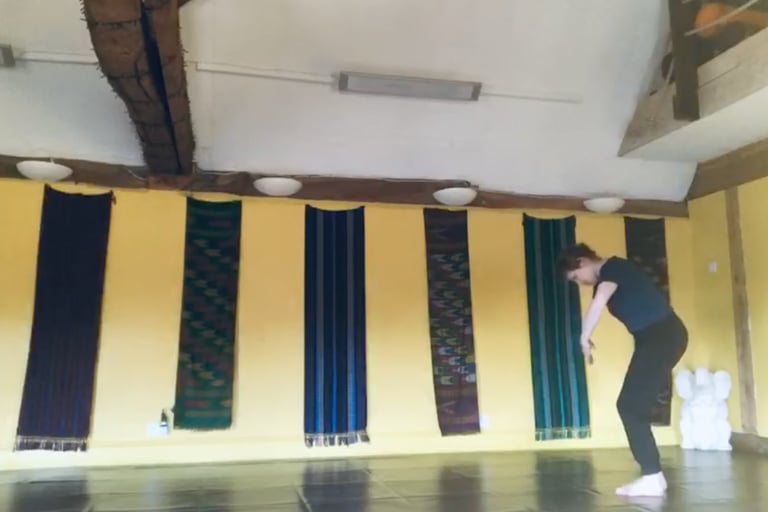
Today's exploration began with walking...
slowly...
without a destination...
allowing the breath to guide each step.
The slower I moved...
the more I noticed...
My shoulders lifted whenever I anticipated the next movement...
My breathing became shallow whenever I tried to "perform" the exercise rather than simply experience it.
I stopped...
listened...
and began again...
Returning to the breath brought me back into my body.
It reminded me that awareness is not separate from movement...
it is part of the movement.
What if embodiment isn't about learning something new...
What if it is about remembering what the body already knows...
Each time I returned to listening...
I discovered something different...
not because I changed the movement...
but because my awareness had changed.
That has become one of the most valuable discoveries in my research so far.
References
Barbour, K. (2004) 'Embodied ways of knowing', Waikato Journal of Education, 10, pp. 227–238.
Feldenkrais, M. (1972) Awareness Through Movement. New York: Harper & Row.